Interview: CHRIS PITSIOKOS
The New York-born saxophonist, composer, and improviser talks about playing with Keiji Haino and Otomo Yoshihide, living in Berlin, and the state of jazz and improvised music today.

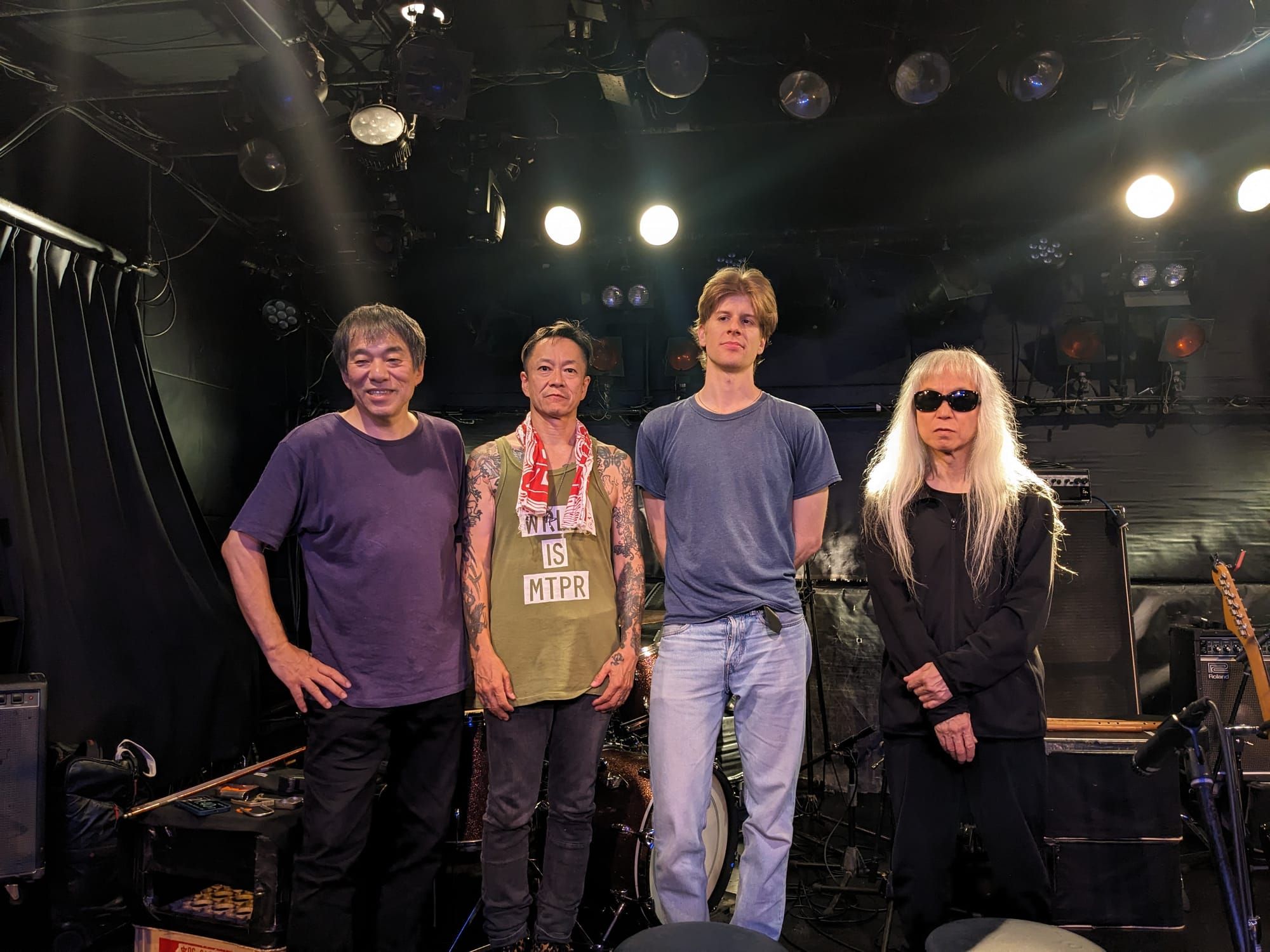
We here at Good Experimental Music have been big fans of the work of Chris Pitsiokos for a long time. The New York-born saxophonist, composer, and improvisor has made a ton of good stuff for the past decade and a half, be it solo, with his band CP Unit, or in collaboration with scores of like-minded artists. (If you need a starting point, I'd recommend his solo album Fancy New York Artist.)
His newest release, On the Impossibility of Change, documents a performance he did in Tokyo in 2024 with Japanese legends Keiji Haino, Otomo Yoshihide, and Tatsuya Nakamura. Pistiokis has worked with Yoshihide for over a decade, but he had never played with Haino or Nakamura. The four come up with so many sounds, speeds, and moods throughout these nine tracks, sometimes diving into full-on noise, other times going sparse and tense, though never really minimal. The set is so filled with anything-could-happen anticipation that you'd probably need to listen to it 100 times to remember what happens where - and you'd enjoy every spin.
Pitsiokos, who currently lives in Berlin, is an intriguing thinker on many subjects regarding music; he periodically posts such thoughts on his Substack and Instagram accounts. We jumped on a Zoom call with him last week to talk about the new record, his relationship with Yoshihide, life in Germany, and the state of jazz and improv today.
Since this is our first interview on Good Experimental Music, we've made it free for everyone to read and share! Enjoy!
Good Experimental Music: How did this concert come about?
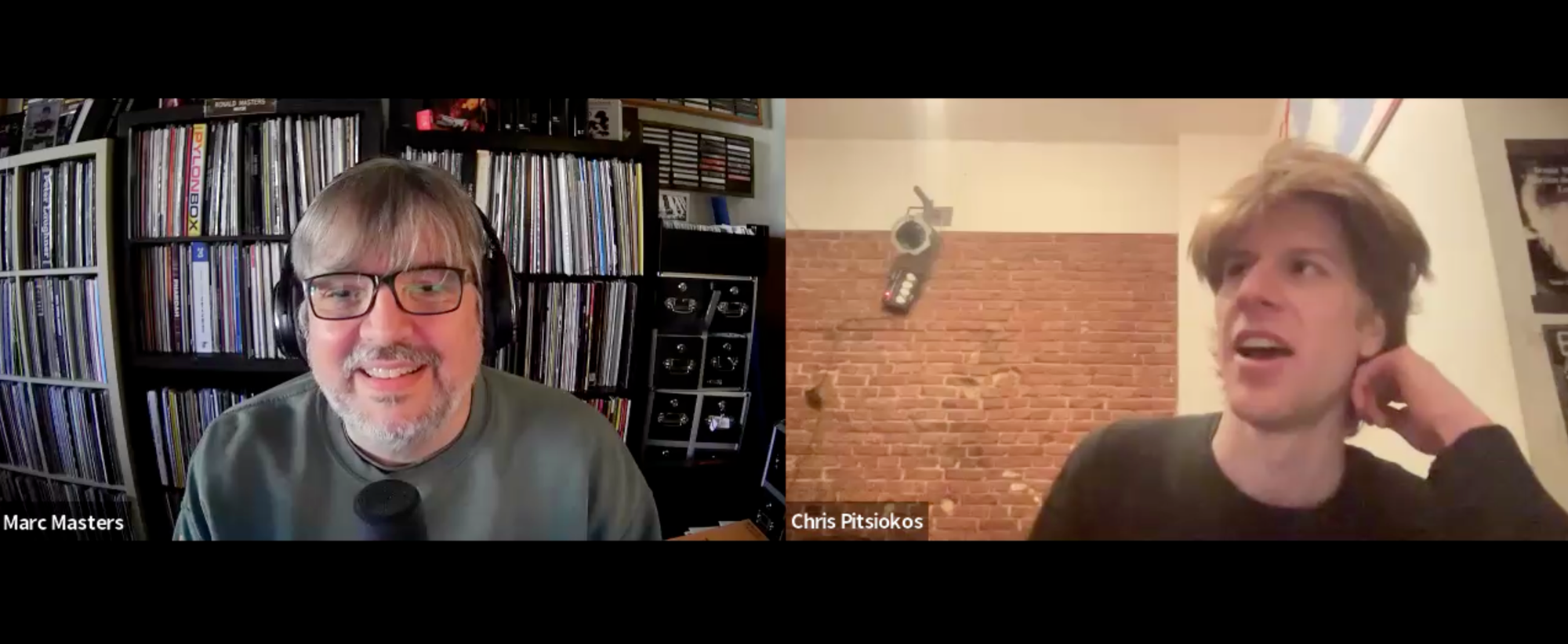
Chris Pitsiokos: Well, I have this long-standing collaboration with Otomo Yoshihide that's been going since 2017 or 18, and we've done a bunch of European tours. In 2024, he had this idea to do a big tour through Asia, mostly as a duo, but we did some collaborations along the way. We toured through seven countries and did about 20 shows. And this concert was the first show of the tour.
GXM: Oh, wow.
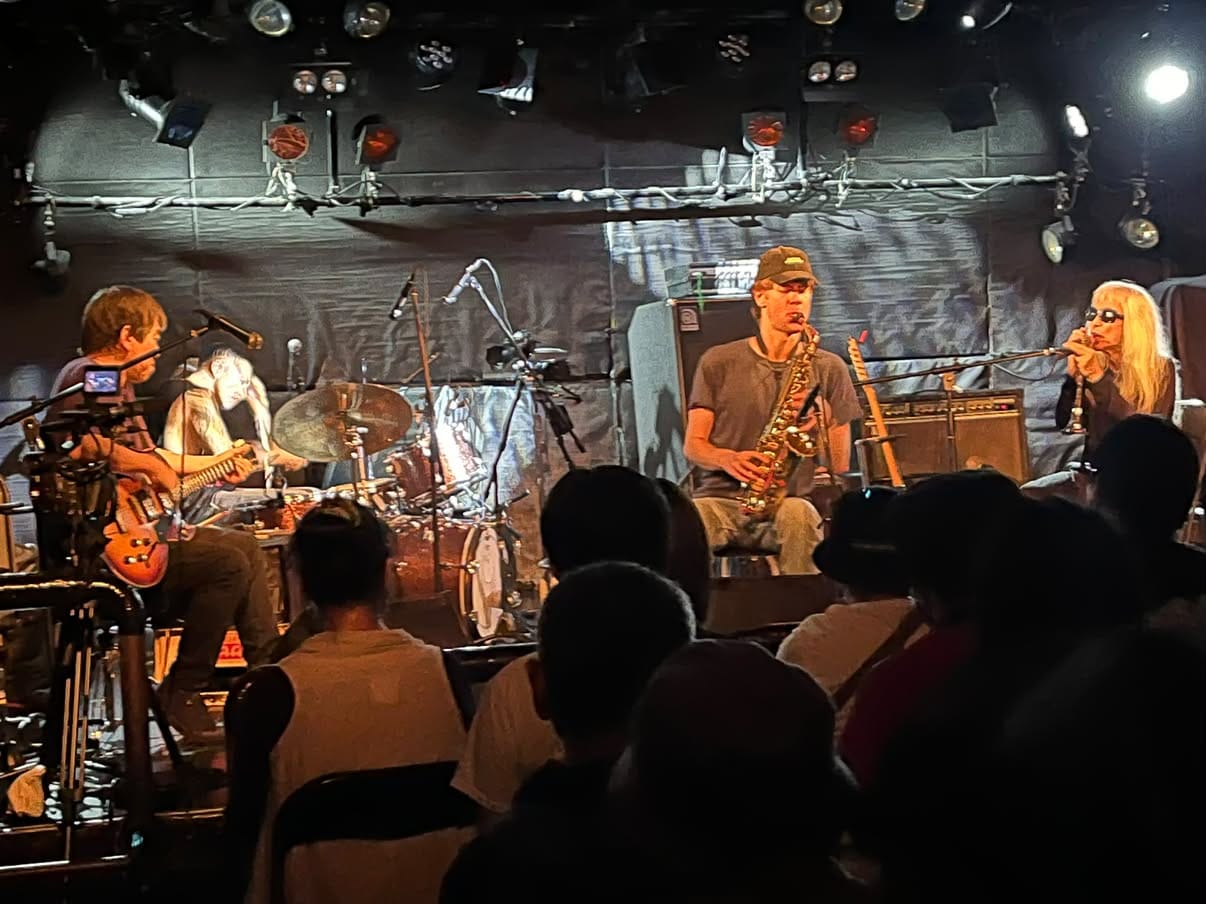
CP: Yeah, Otomo asked me who I wanted to work with in Tokyo, and I said," Well, I've never played with Keiji Haino, that would be cool." (laughs). So he set that up, with Tatsuya Nakamura on drums. I don't think I had ever heard of Tatsuya before that. I don't really know anything about the Japan punk world, but I guess he's quite well known in that scene. But now he works quite a bit with Keiji Haino.
GXM: So at the show you played in multiple configurations?
CP: Yeah, we did two sets: one of me playing duos with everybody, and then we played as a group, but I only released the group performance.
GXM: Was there any rehearsing, or was it just like, let's jump into it?
CP: We got a bit of a sense of each other during soundcheck, but we basically just jumped into it.
GXM: In a situation like that, how much are you thinking, maybe I need to listen more than usual because I haven't played with these guys before, or do you trust your process generally will work?
CP: I would say I generally trust my process. But even though I've played a lot of shows with a lot of people I really admire, this was a very special one for me, and maybe a little bit more intimidating than normal, I have to admit. Especially the duo with Haino, which didn't make it on the record. We started off the night with that, and he's so unpredictable. He had everything there: gongs, flute, guitar, this double-reeded thing, which he used in the group set too. So I had no idea what was going to happen.
GXM: The group recording is really good, there's so much going on in it. Was it surprising when you heard it after having played it?
CP: Otomo sent me the recording later that night, actually, and I listened immediately and I liked it, so I already thought, maybe this should be released. But I shelved it for a while; I was a bit intimidated, honestly, about asking Keiji Haino if we could release it. I didn't really know how to go about that. But in the end, he was super easy. And I guess everybody was happy with it, because there was no question about whether it should be released.
Maybe more so than some of my work, this one is really a process. You kind of have to go along for the whole ride, I think. There are certain points in the record that only make sense in the larger context of the record. It has this long build, and there's this arc in the record that I really like, it's very emotional to me. When I'm listening, I don't feel that I'm driving it so much. I'm proud of my contribution to it, and I don't mean to say that I'm taking a backseat, but it has this feeling of being pulled along into this very cathartic moment. A process of unfolding, letting things bloom with patience.
GXM: When you're in the middle of something like that, do you ever think, wow, this is going so great, but I can't think about that, I gotta concentrate on playing?
CP: Yeah, sometimes there are moments of reflection. But, there's a paradoxical feeling when something is going really well in a performance, like nothing can touch it. It's like…beyond the possibility of mistakes–there is no right or wrong choice anymore. Ornette Coleman talks about this, and I've always been fascinated by it. Somehow you reach this point where anything goes in the music. It’s an ecstatic feeling of freedom: that one can make this choice or that choice, but the music allows for either, beyond judgment.
GXM: That's great. How did you get hooked up with Otomo to begin with?
CP: : It was my first tour in Japan. The original reason for going there was a festival called Jazz Art Sengawa, put together by Makigami Koichi, who's a vocalist, the leader of the band Hikashu. Otomo got wind of that via Nonoko Yoshida, a saxophonist who he has worked with over the years. She played my music for him, and he liked it, and he happened to be curating the Sapporo International Arts Festival a few weeks after the Sengawa fest. So he invited me to play two concerts in Sapporo, and we really hit it off. He took a big chance doing that. It was actually super generous of him.
A few months later, he was coming through New York and asked me if I wanted to set up an unofficial gig? And so we played in a basement somewhere (it was called 49 shade). It was the first time Otomo had played for some years in New York, and it was this random DIY gig. And then that Spring he invited me to do a tour in Europe that he mostly organized, when I was still living in New York. We've been working together ever since. We’ve now played at least 50 gigs together in like 25 countries or something. Actually it’s possible there is no one I have performed more with.
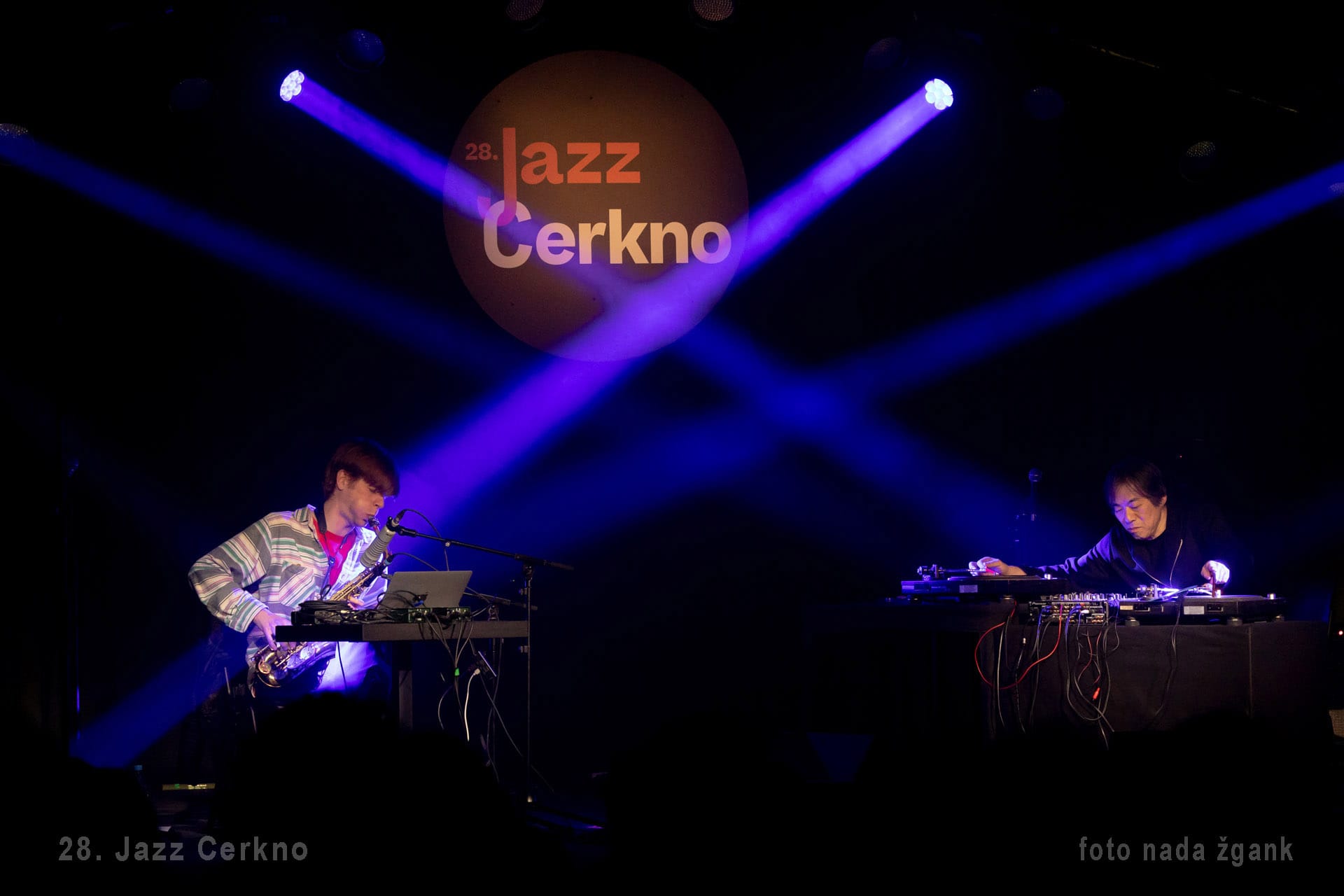
GXM: Is there anything you can define about what kind of connection you have?
CP: It's special, I don't know how to really define it. We have very similar interests in music – more experimental jazz, plus noise, and there are certain records that...it's kind of funny to say, because it makes me feel a little bit old-fashioned, because he's like 30 years older than me, but somehow we realized there are records that were really important to us both when we were young. Like, for instance, Topography of the Lungs by Derek Bailey, Evan Parker and Han Bennik, a record that we both absolutely love and was very influential for each of us.
There's a playfulness in what he does, and what I do, even in just our day-to-day stuff. Like a goofy kind of ADHD behavior we both have, where, for example, we're both always picking things up and hitting them to make sound. I remember on the first tour we did, he started doing this sound (makes popping sounds with his mouth). And I was like, oh, I can do that! We have the same fidgety kinds of habits, which might seem superficial, but has to do with an insatiable curiosity about the world. On this last tour I said, I bet you pissed your parents off a lot with all this fidgeting around, right? And he said, definitely. I was like, yeah, me too. So there's something very tight with the way our brains work, even though we were born on different continents at very different times.
GXM: What prompted your move to Berlin?
CP: Exactly five years ago, I spent a month here, doing a test run after a tour. I went home and got my shit together, and moved six weeks later. It was mostly an economic consideration. Most of the money I was making on music was in Europe anyway. I'm used to living on nothing, and during the pandemic I got unemployment money, so I saved enough to get me over here and get my feet on the ground. I had already discovered that Berlin is still quite cheap. Since I've come here, it's gotten more expensive, but it's still remarkably cheaper than New York. My rent is 515 Euros [roughly $539 USD] a month. I live alone, and it's a new contract, it's not some sneaky thing. So it's still relatively cheap here, and I make more money here on music.
GXM: In the past you've written on Substack or posted on Instagram some interesting takes on the experimental and improv scenes. Do you still think about that kind of thing a lot?
CP: I think about it all the time. I doubt that there was any real golden age where the best musicians got all the credit and shitty musicians never got any credit. But I've been around with some semblance of a career in this music for 15 years now, and I can say even within that window, there was a transition where I didn't have the sense that it mattered anymore even if you're good, whereas 10-15 years ago, it kind of mattered. Of course there were still people who were really good who slipped through the cracks, but being ambitious, talented, creative, did have at least some substantial influence on whether or not you could get a gig. But around 10 years ago, this hype machine was born that began to matter more than any of that. There are many ways to think about that, and there are many reasons for that.
First off, I think that every aspect of culture now is supposed to participate in the so-called “culture war.” I think at the beginning, maybe, there were reasons to be optimistic about that. But I don't think you can reduce music to those terms. It's hard to talk about, because I do basically agree with the oft-repeated statement that all music is political...as long as your idea of what political means is broad enough. But the thing, is if someone’s politics are off, or if they are generally a bad person, it doesn’t necessarily make their music bad. Many musicians I love were really problematic. I don’t glamorize that or justify their behavior or politics, but it’s just true. By now this is sort of a tired subject, and I don’t think many people disagree with me, but it hasn’t been put out there in writing so much from within our community. And moreover, if you look at the way institutions work, it’s still very much about culture war politics (most often identity politics) rather than anything having to do with music per se.
It's hard enough to just be a musician. I care about a lot of political issues, but it's not my job, and it's not even really what I'm good at. In Germany, especially now, the whole structure is built around he politicization or social work-ification of music. It's just running cover for what's actually going on. You have the German state doing absolutely horrible things in Gaza, indirectly, through their funding of Israel and political support of Israel. At the same time, the state is funding all this anti-colonial art. It's so clearly a distraction, or white washing or whatever you want to call it, and it's definitely deliberate. There doesn’t seem to be much compelling evidence that people making music against colonialism has really done that much for colonized people anyway. I don’t say that people shouldn’t use their platform (if they have one) to draw attention to these issues. But I see that as something kind of different from making ones work *about* that. Of course I would still say it’s not completely black and white…clearly "Strange Fruit" is a poignant and radical political song. As is "Hurricane". But neither Billie Holiday nor Bob Dylan made their careers about those issues. They were musicians first, and had some political themes in their work.
This is less of an issue in the US, because there's not so much art funding to speak of there, but I think anytime the state is funding art, there's something in it for them (the State). There's some kind of propaganda motive. And I don't trust it, basically. Of course, sometimes some things can slip through the cracks - good people can get funding, and there are good people who are doing legitimate political work in their music. But I think that overall in the balance of things, the focus has been taken away from the music too much. Music can exist, sort of (again, I won’t say 100%, but sort of), its own terms. It doesn't need to validate itself according to these topical political motives. And by the way, who gets to say what is an appropriate political motive for music to have? The state?
GXM: We're in a time where artists are expected to be their own marketer, their own publicist. But that doesn't mean there aren't still structures that do gatekeeping and determine who plays where, or what gets talked about. How do you view all that?
CP: Yeah, that's a whole other side to it that's as important, if not more important, than the politicization of the music. We live in a time where, technologically we theoretically don't need gatekeepers anymore. We don't need record labels. I don't think categorically that labels are always leechy or useless but…they usually are. In Europe, there's this pay-to-play shit that's insane now. So many people are paying labels to put their records out. I was on one collaboration which we got funding for, but we used it to pay a label. I was against it from the beginning, by the way, but everybody else in the band wanted to do it. I'm not gonna call the label out directly, because I don't think they're bad people. But I think the structure is fucked up, and people need to interrogate what’s going on here. But anyway, it didn't really do anything for us. In fact, the album got less press than the previous record that the band put out, which was self-released. Basically, I think that writers and listeners in general should follow artists, not labels.
I recently had a really open discussion with a prominent writer about why hiring a publicist works, and his main justification was that they are just easier to communicate with than artists usually. I appreciate his frankness, but this is a terrible excuse. I know everyone is overworked, bombarded with proposals, etc. But what we are doing here is extremely important. Music is not a joke. As Val Wilmer quoted McCoy Tyner saying, “Music’s not a plaything—it’s as serious as your life.” Let’s take it seriously.
The social media thing, I ignored it for years. But, I joined Instagram four years ago and it's helped me. I think I sell more CDs, and maybe I've gotten some gigs out of it, I don't know. But it takes so much time. Because it's a highly addictive technology, so I just waste time looking at other bullshit. And also, if you want to really succeed at Instagram, you have to put time and thought into it. But this is where it becomes contradictory, because being an independent, self-organized artist is a big part of the history of this music. Sun Ra ran his own label. Evan Parker, Derek Bailey, and Tony Oxley had their own label. So that's a good thing that people have a direct channel to their fans. People should be entrepreneurial and try to exist outside of these gatekeeping systems. But you have to draw the line somewhere, you know? Eventually, if it becomes all about the fucking Instagram marketing...
GXM: A while back you wrote about the idea that some of this music, free jazz and improv etc, has kind of frozen in place.
CP: Yeah, that exploded a little bit. Maybe everybody was sort of thinking it, but not articulating it. The fact that this music is viewed as so forward-thinking, but a lot of it sounds like it could have been made in 1970. Some of my music falls into that, too. It is challenging to create really fresh-sounding music in this field. But I'm a bit sick of hearing the same improvised music and free jazz happening. One thing that I've talked about with some friends recently is that there's this kind of snobbery around free jazz being high and mighty compared to other forms of jazz. But free jazz came around at basically the same time as hard bop. So people might say, oh, Wynton Marsalis, he's so retrograde, he's super backwards. But like, Free Jazz by Ornette Coleman was recorded in 1960! It's really, really old music. 66 years separates us from that album. Topography of the Lungs came out 50 years after Louis Armstrong’s first ever recording. Think how far they came in that time! 53 years later, I’m not sure we could say the same, unfortunately.
GXM: I haven't really thought about that, but it's true. Playing free jazz that sounds like the 60s or 70s is just as retro as playing bop that sounds like that time.
CP: Yeah, exactly. Maybe it's more of a question of non-commercial versus commercial music, and people sort of intuitively think non-commercial music is more progressive, even if it's just as old. Free jazz is finding new audiences now, I think that's why it feels fresh to some people now. When I started making experimental music, it was deeply uncool. Then hipsters made it a little bit cool. I was a total nerd, and now like, some of these free jazz festivals are considered so cool.
GXM: I would imagine that's cyclical, though. There will probably be a time again when it's not hip.
CP: I kind of look forward to it, actually. Let's make it a weird, nerdy thing again.